

You are currently browsing all posts tagged with 'urban'.
ACCESSORY DWELLING UNITS = affordable housing made easy
posted on Wednesday, November 27th, 2013 at 2:30 pmLocating affordable housing opportunities in an already existing neighborhood can get very controversial when a project for a pocket of such households is proposed to be located where none has existed before. On the other hand planners, funding agencies and the even the public at large are likely to find agreement in the concept of improving housing opportunities for single parent households, the marginally employed , empty nesters, workforce households, the elderly, the infirm, long distance commuters, short term residents, and so on.
Taking a broad-minded view, most would agree that the more disperse affordable housing is integrated into a community the better for society as a whole. It is a less controversial solution to allow an existing single family property owner to provide affordable housing on their own property for their own family member. But it is difficult to control a semi-independent family member quarters from becoming an apartment for rent on the open market. Therefore many communities have created restrictions in their zoning regulations that prevent this type of affordable housing from being built.
There is little argument against the economic and social advantages of being able to provide an addition/apartment to an existing house that could serve as a semi-independent suite for an aging parent. However, to breakthrough the rule that only one dwelling should exist on a lot intended for one house is no small matter in a typical zoning district. Therefore, getting a permit to build a typical ADU project, such as an apartment above a two-car detached garage, could entail changing the permitted uses in designated zoning districts, changing the definition of a dwelling unit or creating a new type of zoning district, such as what the City of Norfolk has done, to follow below.
The restrictions start with forbidding the installation of more than one kitchen in house zoned for one household. This law was conceived at a time in the history of urban development patterns when suburbia ruled the future view of American land use; houses looked a lot alike, had the private car parked on a driveway in front of the door to an attached garage and were occupied by a two-parent household with children. But today the facts are:
The percentage of American households with children under 18 living at home [2009 USA Today] has hit the lowest point — 46% — in half a century.
The majority of today’s households are more likely to see the advantages of related or unrelated individuals living at the same address, and eating separately is a part of that living arrangement.
The next most bothersome limitation to providing an Accessory Dwelling Unit on a single family property is the size limit of the accommodations. In Virginia Beach the ordinance for what is called “a flex suite” provides for a maximum size of 500 SF or 20% of the floor area of the existing house. This is roughly the area of a two-car garage. It is very challenging to provide the facilities needed for a semi-independent lifestyle (bedroom, sitting space, kitchen, bath, private entry) in this small space.
A similar floor area restriction is very much related to the general area limit for accessory buildings, including a garage or pool house. The limit of 500 SF for a detached garage serves as enough space for an enclosure for two cars. The problem is there is no allowance provision for living space above the garage, typically called a carriage house. It is very good engineering economy to construct such a living quarters over a garage with its own private entry stair. But the zoning administrator is apt to count all of the space over the garage as additional square feet.
The criteria for habitable living space is any space with a ceiling height of 7 feet or greater. This living space definition is found in the International Building Code. The building official is quick to count any attic space that has a height of 7-0 feet or more as part of the 500 SF limit. The result of this anomaly is that architects and designers of detached garages must diminish the building height to have a very minimal attic. The 7-0 living space criteria when combined with the 500 SF floor area limit makes for some very squat looking detached garages.
I have two immediate recommendations that would help clear the way for affordable housing quarters on existing single family properties: (1) allow for a kitchen with its own cooking facilities (range) to be included in the accessory living quarters permit, and (2) do not count living space above a garage as part of the 500 SF of allowable ground area for a detached structure. Instead, write a code provision that gives planners the discretion to allow accessory dwelling units in designated residential districts that includes kitchens and carriage houses.
The discretionary allowance for ADU’s could be required to demonstrate provision for parking for the main house as well as the accessory quarters. There could be an architectural review of the height and width and stairs for carriage house designs. In the Norfolk Zoning Ordinance there is a provision for what is called an Urban District. It reads as follows:
10-12 Urban Residential District (UR).
10-12.1Purpose statement. The purpose of the Urban Residential District is to provide development opportunities in older neighborhoods by encouraging the construction of new, urban homes. The district permits a mixture of townhouses and detached one-family homes, including the possibility of auxiliary structures which can contain a secondary dwelling unit located on larger lots.
10-12.2Auxiliary structure. For purposes of the Urban Residential District, an auxiliary structure is expressly permitted to contain a dwelling unit and shall meet each of the following criteria:
(a) The structure is no greater than the primary dwelling in all dimensional aspects including, but not limited to, building height, width, length, and square footage.
(b) The structure is located on the same lot as the principal dwelling unit.
Some more progressive municipalities have taken steps to allow carriage houses on single-family properties when access and parking spaces are adequately provided. The end result has not proved catastrophic, even when allowed to be rented to non-family member tenants. The motivation to allow carriage house tenancy is typically associated with developments where relatively high dwelling unit density is not controversial and vacant property is at a premium.
Tags: ADU, affordable, apartments, carriage house, housing, parking, single family, urban
Four reasons to encourage and preserve NON-STANDARD BUILDING LOTS
posted on Tuesday, November 12th, 2013 at 1:58 pmWhat is a non-standard lot and how do they happen? Trying to fit a house on an odd shaped lot or a lot that is not the same as the majority of other lots in a neighborhood is the frequent cause of needing to apply for a variance at the local board of zoning appeals. A non-standard lot typically doesn’t provide the minimum width at the building line where the front wall of a house is supposed to be in line with the house next door.
As residential architects we enjoy dealing with the challenge of a non-standard lot. Builders, on the other hand, are happier when they can build the same house shape (changing the front elevation once in a while) over and over again. Sometimes I think that planners are persuaded to side with the builders who are constantly striving for sameness and street regularity.
- My Reason 1 for advocating that the boundaries of existing non-standard lots should be preserved, for the sake of neighborhood diversity. The special character of a particular residential street and the joy of living there for the various homeowners is improved with houses that do not all look the same. There is even a strong argument for deliberately encouraging lot layouts to be different in the same neighborhood so that houses cannot look the same as each other.The geometry of systematically drawing out lots for a new subdivision takes into account maximizing the number of possible lots in the context of providing a logical site drainage design, as well as compliance with the local subdivision ordinance. If one does this exercise with great diligence the end result is the absence of any non-standard lots.
Planners and site engineers may have gotten overly skillful, in recent times, laying out new subdivisions where the pattern of lots is perfectly uniform, perfectly boring. In is only when the subdivision process was more loosely enforced and developers were less concerned about repetitious products that non-standard lots came into being.
The City of Norfolk has a name for leftover lots in its urban neighborhoods. They are called Gem lots. Truthfully many of these lots are abandoned, now city owned, and need to be joined to adjacent properties for viable use and inclusion on the property tax roles. Occasionally the Gem lots can stand alone as a property for a new single-family home. We have designed homes as narrow as 12-0 feet for such a property.
- This brings me to reason number 2 for advocating restraint in the elimination of non-standard lots: an appropriate house for such a lot may need to be more compact and thereby more affordable to a family that otherwise could not own a home. Habitat for Humanity is just such a vehicle for getting this to happen with non-standard lots. We have created many houses for non-standard properties that were donated to HfH to build a home with volunteer labor and the world is better off for it.
- Reason number 3 for relishing the preservation of non-standard lots is the increased number of dwelling units per acre, higher urban density. This idea makes some surrounding homeowners nervous. More people living on my street could mean introducing a household that is “not like me” and more traffic and general fear of the unknown. Actually the social health of a neighborhood is improved by diversity and density; bringing with it an increased level of public services including police and fire protection, schools and public transportation.
- My 4th reason for standing up for preserving the existence of non-standard lots is the most compelling of all. To do so promotes a sustainable living choice by allowing a new house on a property that is already developed for construction, including the existence of public sewer and water and sidewalks and garbage collection and on it goes. Simply said, building on an in-fill lot saves energy and reduces the carbon footprint for a new home better than any other population growth strategy possible.
I was motivated to write this article from a question that was asked by a planner wanting to know what regulations may have been used elsewhere, for community wanting to follow a standard procedure to consolidate a non-standard lot into a larger parcel. I hope that the lots in question can be developed separately. We love the technical challenges and the social rewards of designing homes for non-standard lots.
Tags: baltimore, canton, house, lot, narrow, non-standard, plan, urban
HISTORICALLY APPROPRIATE HOUSE PLANS FOR URBAN INFILL PROPERTIES
posted on Tuesday, May 7th, 2013 at 10:21 amAmong the blight clearance strategies of a Redevelopment and Housing Authority they routinely purchase properties that are in poor condition or foreclosed or otherwise unsuitable for the health, safety and welfare of a neighborhood. This approach is especially effective when contiguous properties are involved and it can implement several houses at a time to replace deteriorated housing stock with new affordable construction.
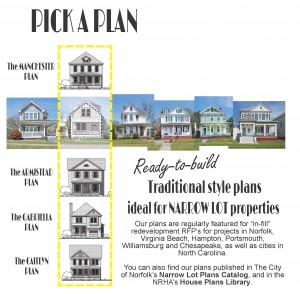
In many cases an RHA finds itself with an opportunity to call for new homes to be built in a similar architectural style as the historical character of the existing neighborhood. This is accomplished by publishing Requests for Proposals (RFP’s) asking for builders and/or developers to use certain pre-selected plans. The plans come from portfolios where independent architects publish ready-to-build editions of historically appropriate traditional neighborhood designs.
Many urban homes were originally built on the small narrow lots platted in the early 1900’s. Some of these house plans came from pattern-book catalogs such as Sears and Roebuck. It is appropriate that a replacement house plan, a century later, should come from a similar catalog of plans. The character of the old neighborhood can be retained with this strategy of individual lot infill projects.
GMF+ attended the Virginia Association of Housing and Community Development Officials VAHCDO conference in May 2013 in Virginia Beach. It provided a vendor table display at the event where a catalog of its historical urban infill house plans was available. The same plans can be seen on this website as NARROW LOT PLANS. These plans are regularly featured in RFP’s for in-fill projects in Norfolk, Virginia Beach, Portsmouth, Williamsburg and Chesapeake, as well as cities in North Carolina.
Tags: infill, narrow lot, Neighborhood, Norfolk, PHA, plans, RHA, TND, urban, VAHCDO
Nicholson Residence
posted on Tuesday, March 13th, 2012 at 3:34 pmNorfolk, VA
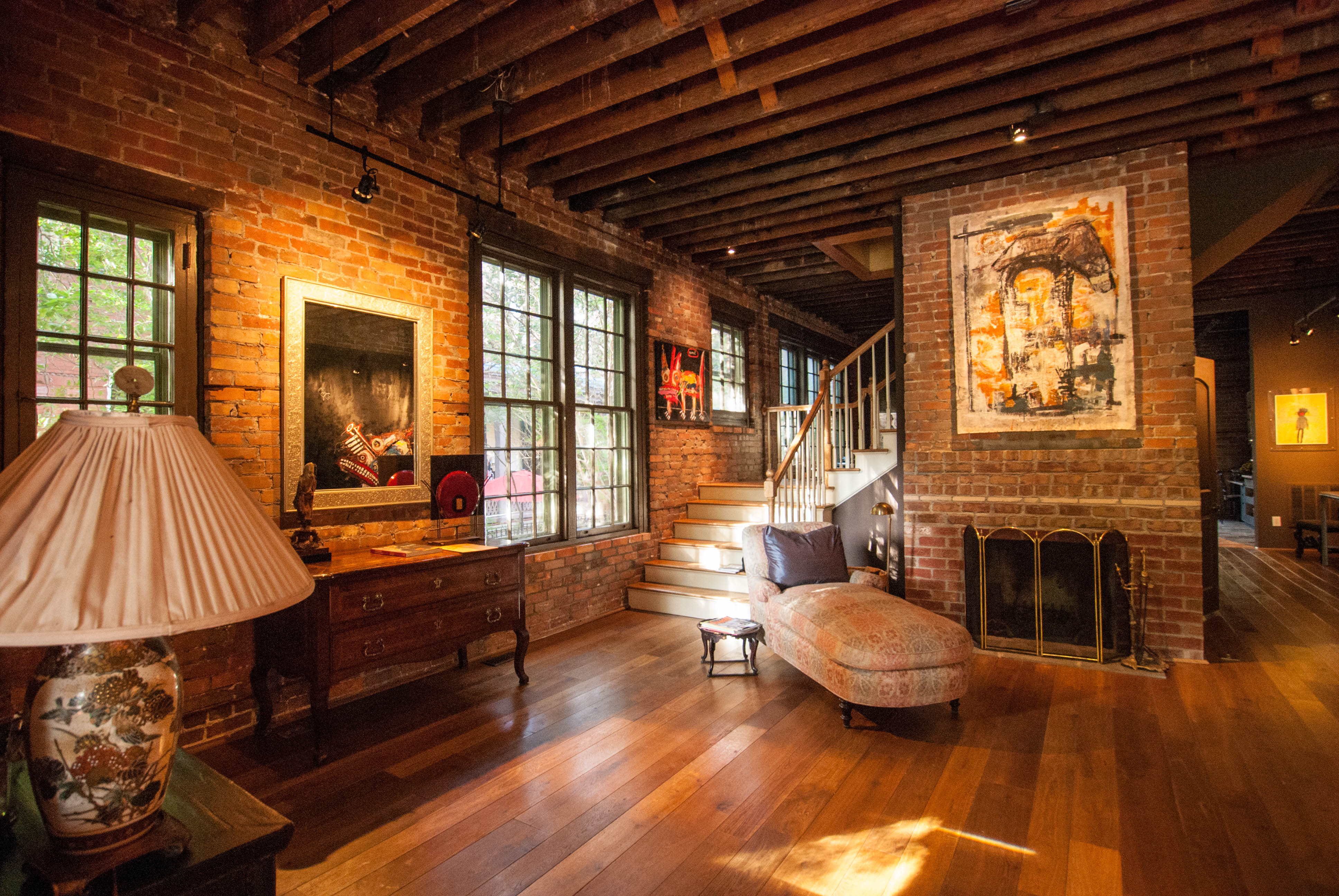
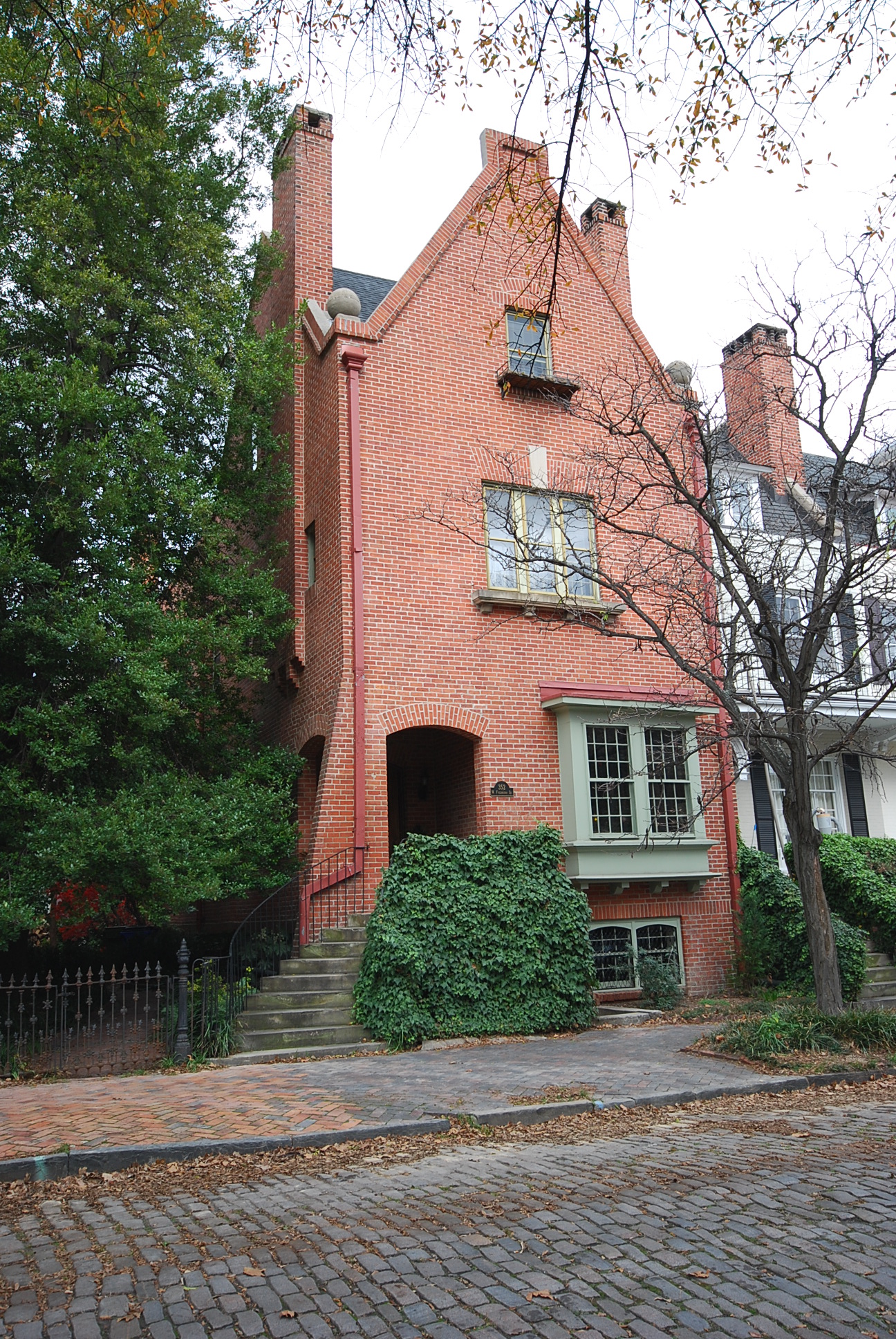
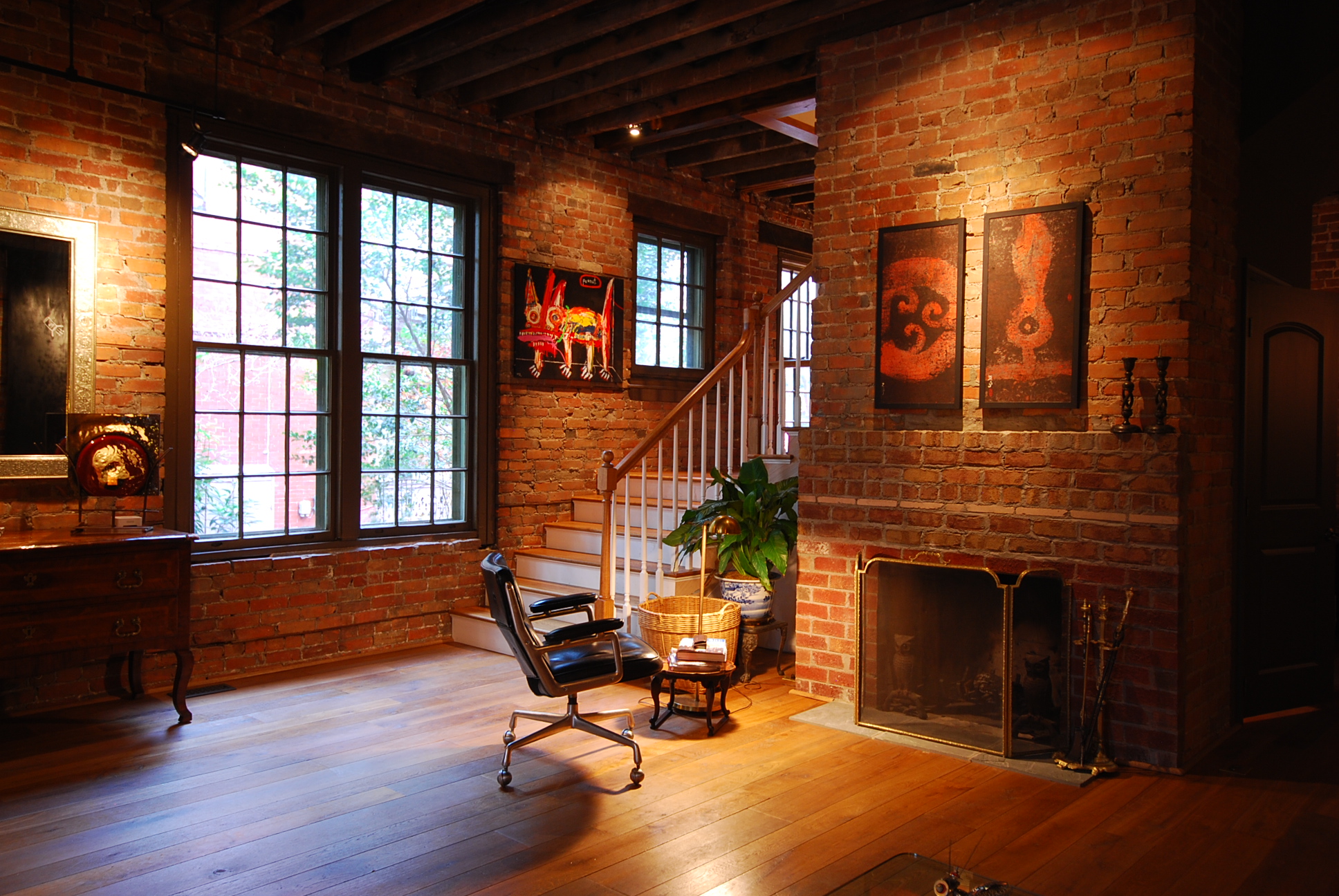
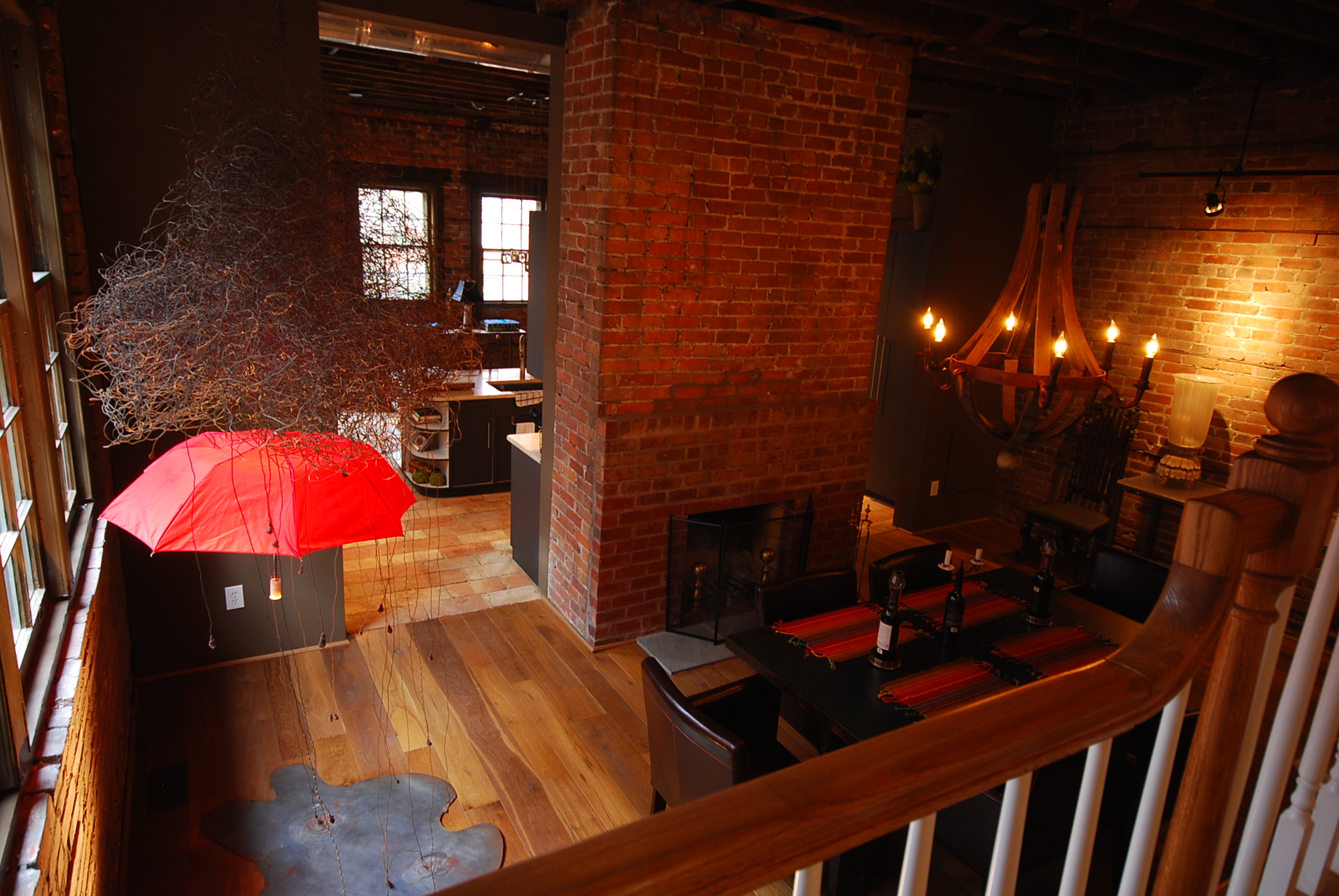
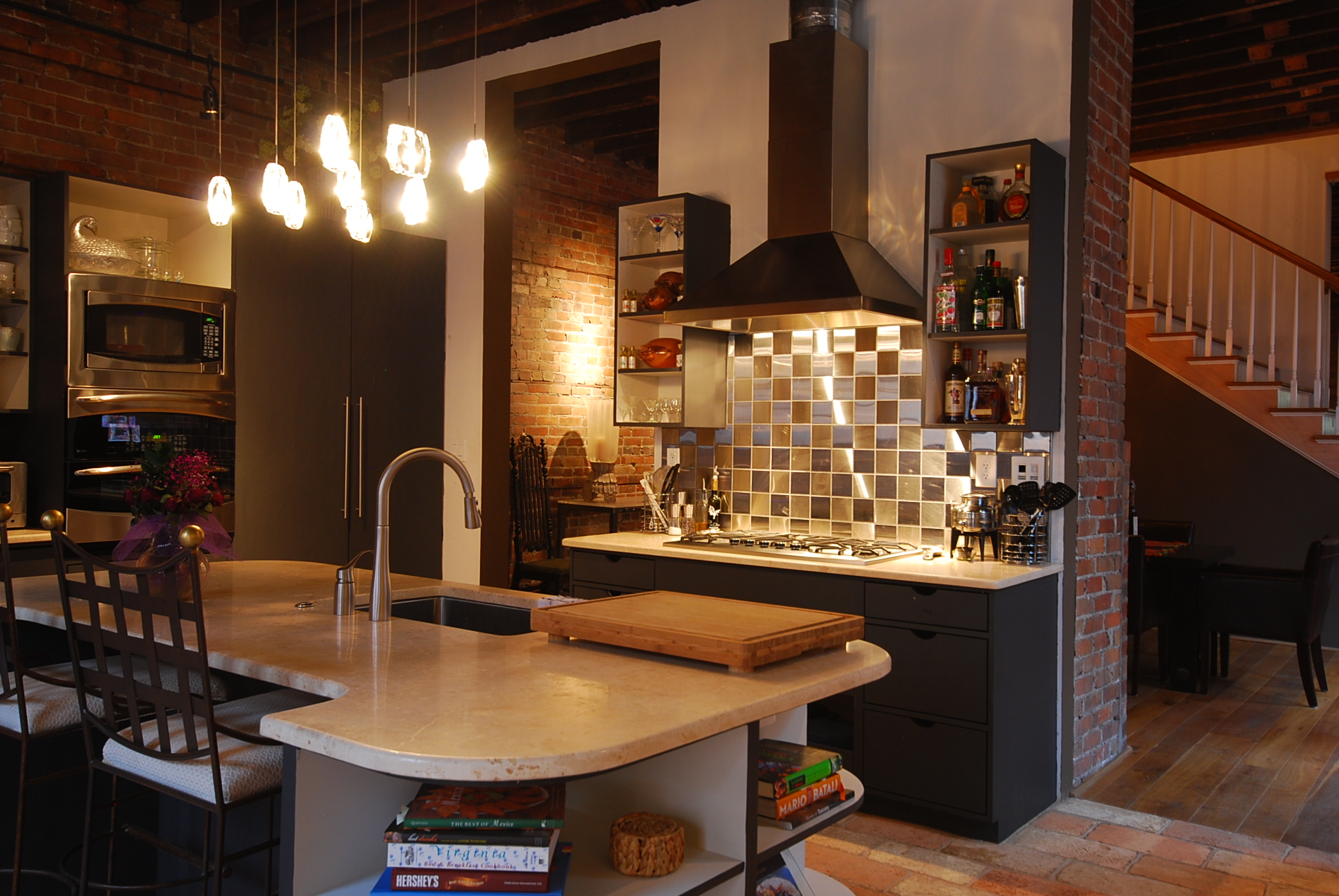
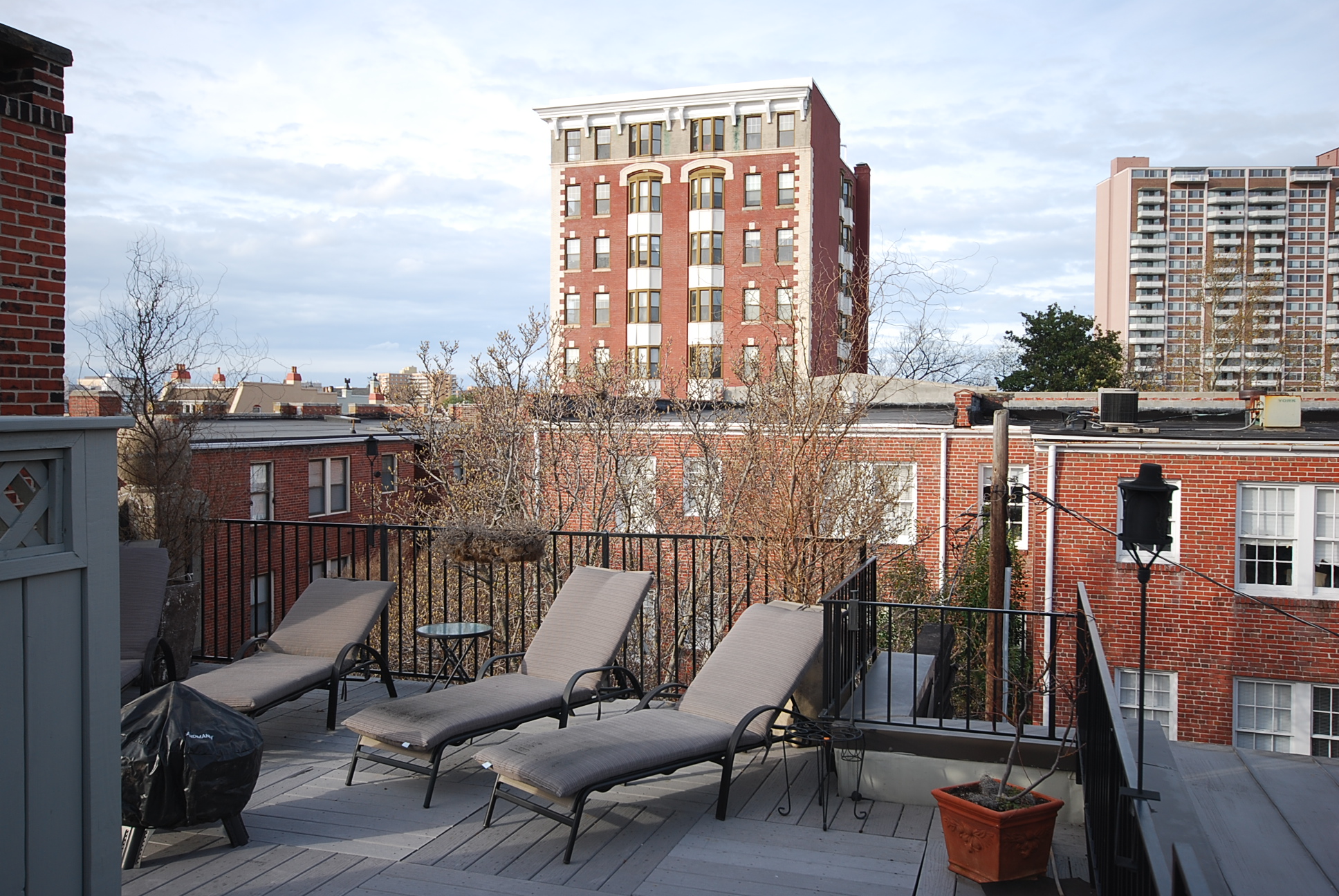
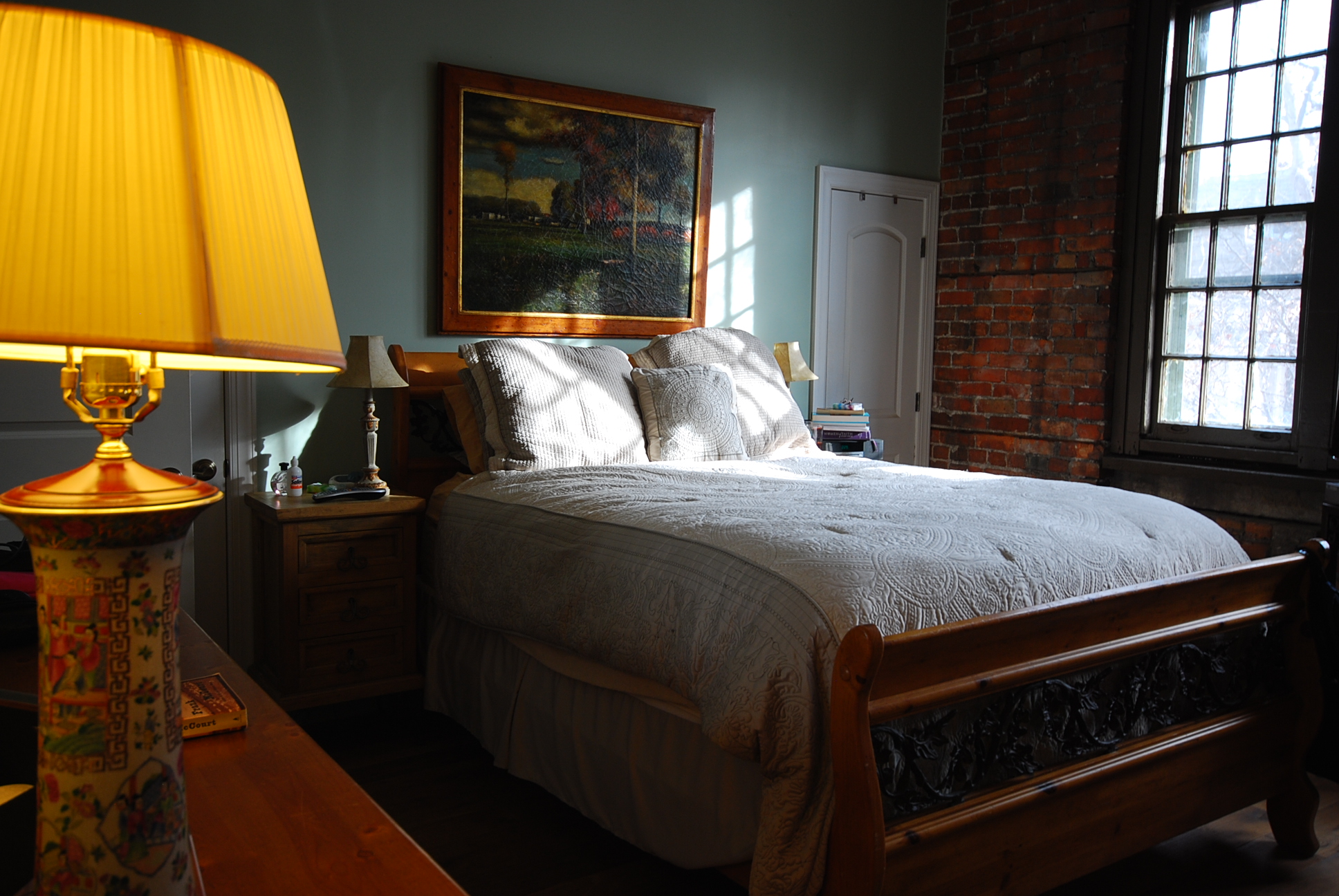
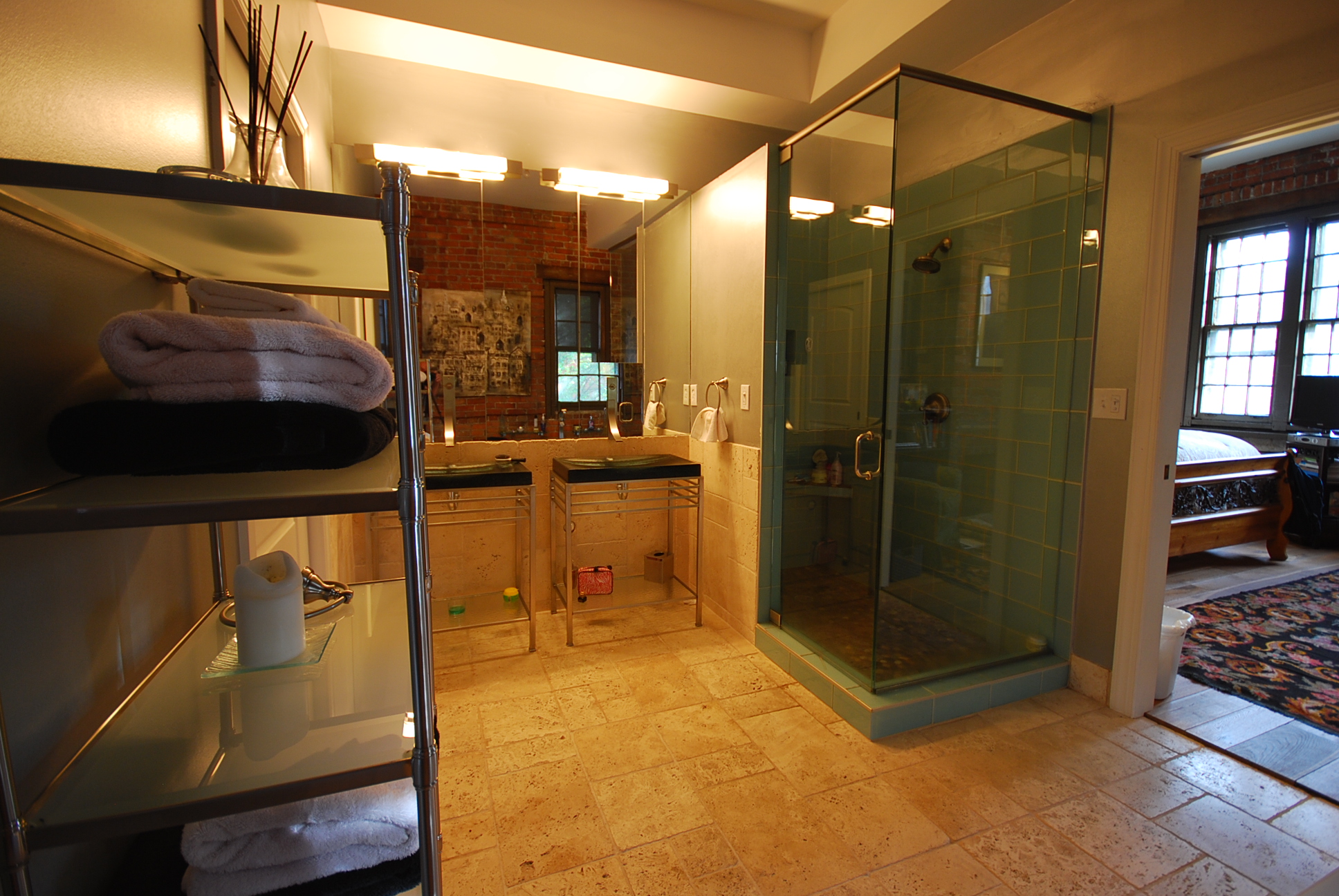
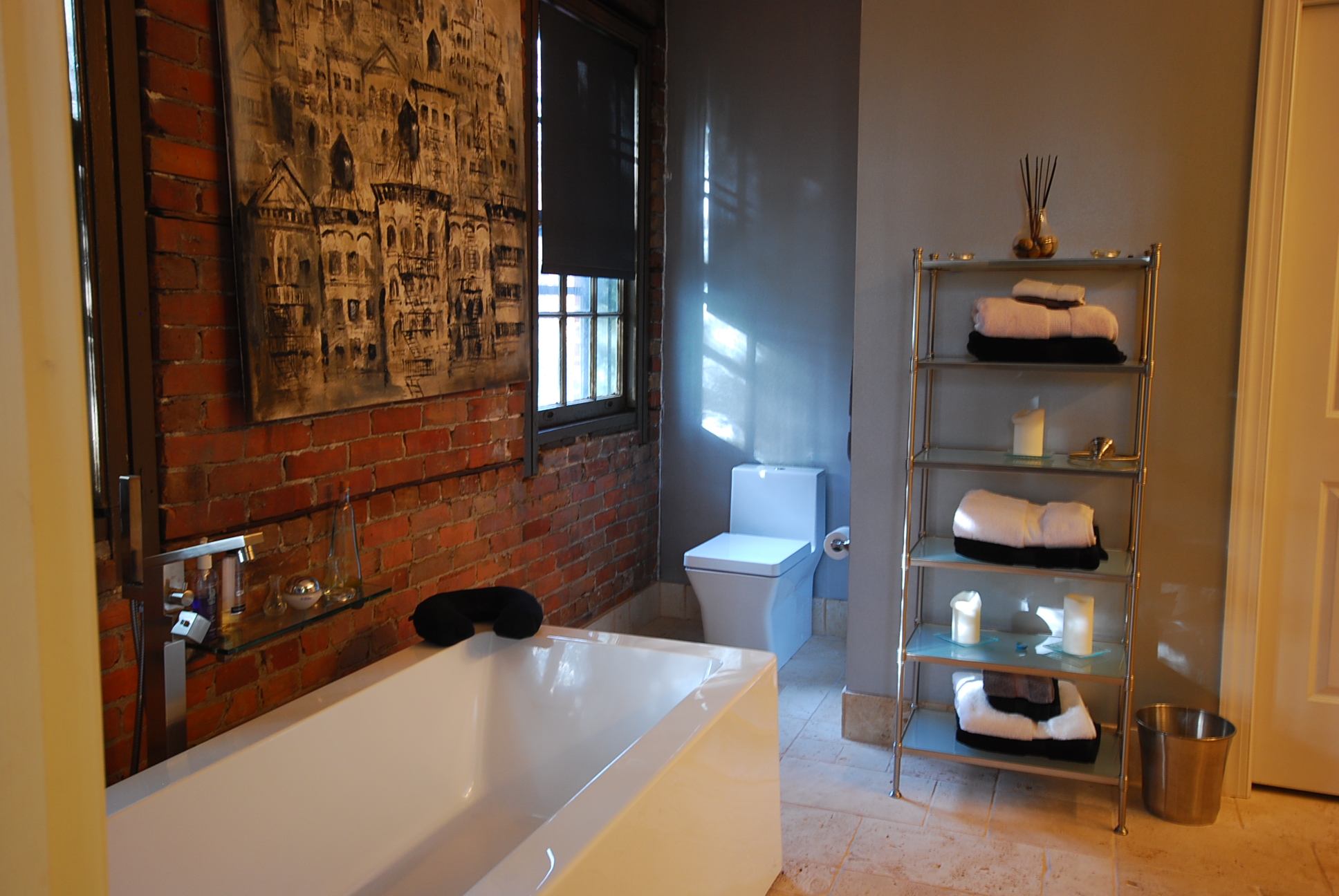
This historical residence is situated on the cobble stone street of Freemason in the downtown Norfolk, Virginia. GMF+ designed the interior renovations for this project. The exposed brick on the perimeter walls is the original wall structure. The plaster ceilings were also stripped of plaster boards, exposing the original wood framing.
Tags: cobble stone, dutch, Freemason, historical, Nicholson, Norfolk, renovation, restoration, urban
2012 Shaping the future of Hampton Roads, Virginia
posted on Sunday, January 29th, 2012 at 8:46 pmThe Virginian Pilot this week has been chock-a-block with significant stories that could foretell some remarkable physical transformations of Hampton Roads for years to come. The visions of the future urban planning opportunities are all around.
1. HRT has established a bus route to Norfolk International Airport, 1/27/12 (how long have our airline travelers been deprived of this simple service?) It starts on February 5 and will be in effect only until March 10 to test customer interest. I think everyone should drive over to the airport and take a bus ride someplace to rack up some passenger data that will establish the service permanently. 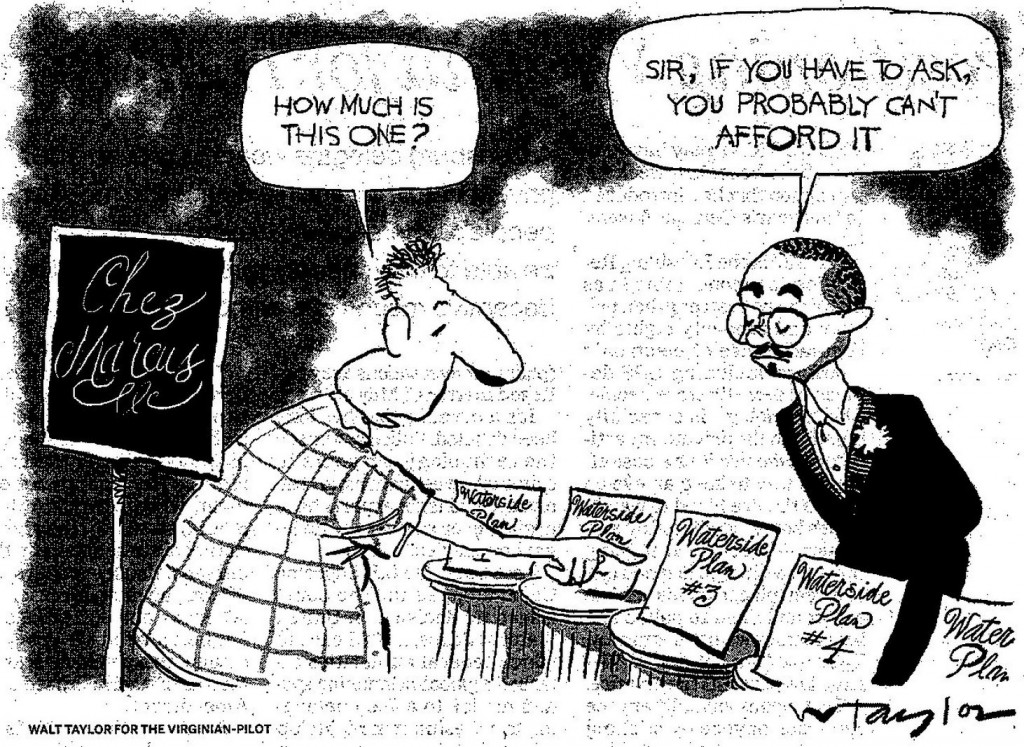
2. The editorial cartoon 1/29/12 for choosing a plan for the future of Waterside was worth a thousand words ….resounding the sentiments expressed by one of the Norfolk City council members at this week’s public display of the five plans under consideration: “Do we have to choose one of these?” Those of us in the audience of onlookers know the answer full well: “we want none of these plans if you please, they are all baloney.”
3. A really BIG item this week is the page one story 1/29/12 about a possible referendum in November for extending The Tide light rail into Virginia Beach. This is remarkable since it un-stalls the opportunity to get federal stimulus funds for the project before it’s too late.
4. Urban Outfitters is coming to 271 Granby Street. This news got a huge spread in the Sunday business section 1/22/12. It is actually is very good news, foretelling future prospects of re-establishing downtown Norfolk as retail shopping destination. Congratulations to developer Bobby Wright. This event brought out the editorial commentary of a staff writer, Michelle Washington, to emphasize the belief held by city and regional planners that this kind of development is the beginning of Norfolk’s reemergence as a pedestrian “happening” place, in her words: the city’s Cool Factor.
5. Then there was the story about the Kempsville Historic Master Plan, Beacon 1/29/12, where citizens are concerned about the crossroads acreage at Witchduck Road and Princess Anne. It is proposed to rezone the area to higher density residential use, namely apartments on the property surrounding the former Kemps Landing School structure. We hope that the fears of surrounding residents can be assuaged to allow for the opportunity to give this geographic confluence a sense of place that it lacks at the present time. Kempsville presently is hardly more than a zip code and a school district. Where is it really? How does someone know they are in Kempsville? The change of zoning will allow for a place-making opportunity that careful planning can shape into a desirable place to come, to walk, to mingle and to identify.
6. My last entry of the week’s recap of urban planning opportunities in the Virginian Pilot is kind of “tongue and cheek”, I admit. There was a story in the travel section about the Henry Ford Museum in Dearborn, Michigan. It struck me that cars belong in a museum and that maybe we will stop planning our cities and neighborhoods like life depends on the automobile. I visited Copenhagen this past year, where gasoline is the equivalent of $12 per gallon and the sales tax on purchasing a new car is 180%. In such an environment one learns quickly how to exist without depending on a car. The end result is walkable urban living patterns and some of the best shopping streets in the world.
Tags: Hampton Roads, HRT, Kempsville, planning, The Tide, urban, virginia beach, walkable, Waterside, zoning
Buckroe Beach, Hampton Virginia
posted on Wednesday, October 12th, 2011 at 8:07 pmBuckroe Neighborhood Preservation
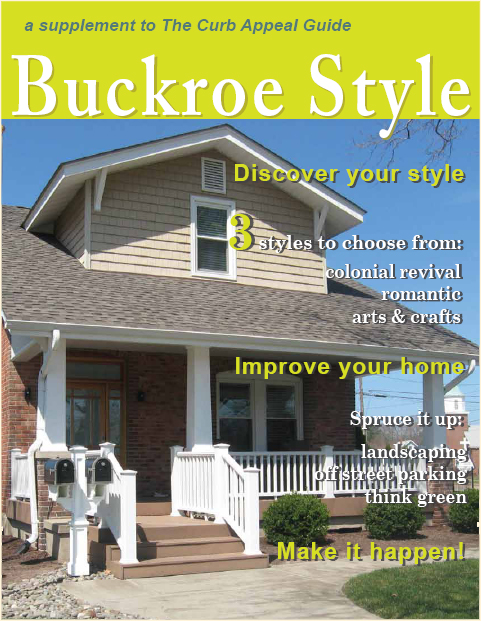
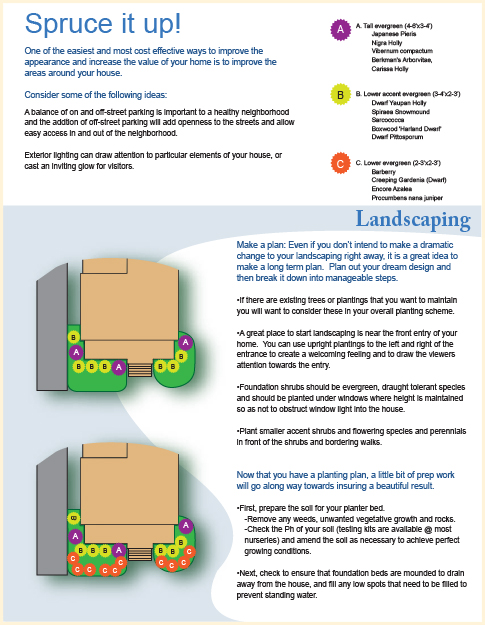
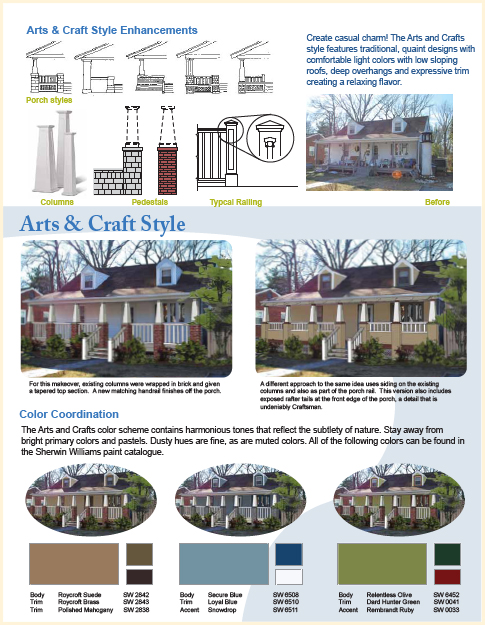
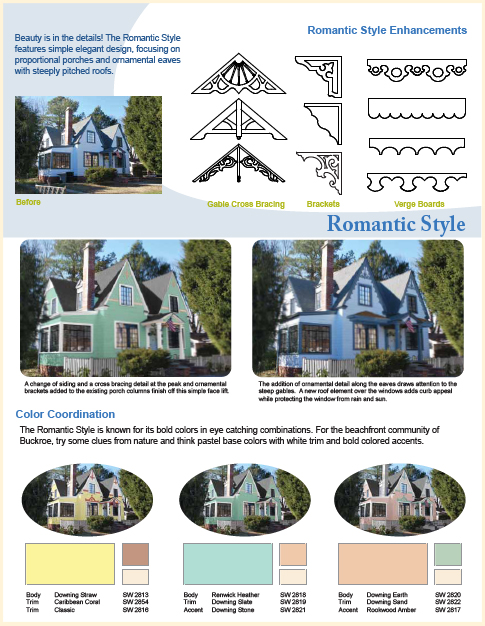
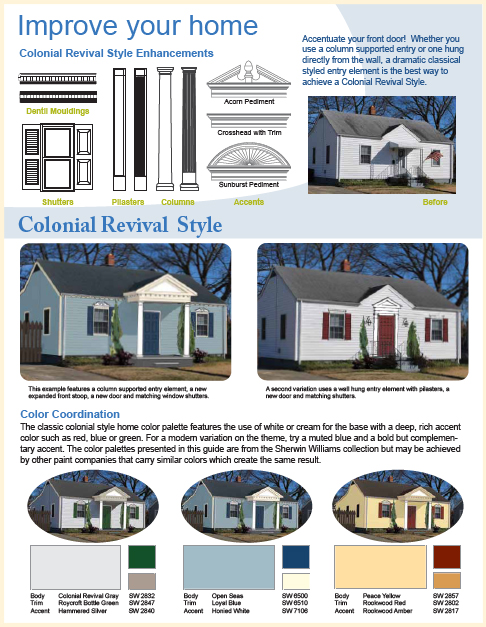
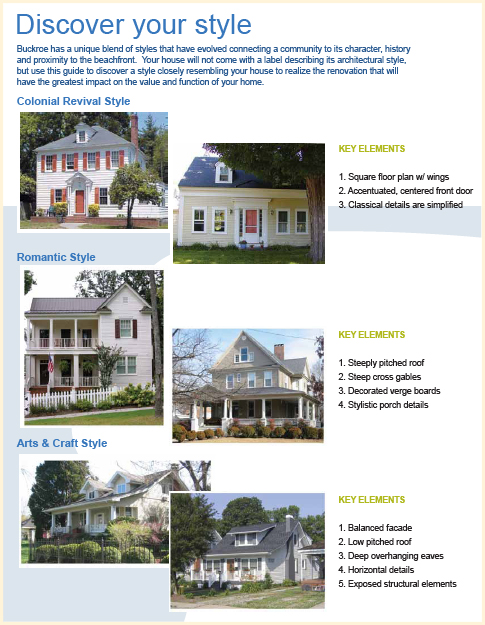
Buckroe Style is a do-it-yourself guide for homeowners in Buckroe, Hampton, VA, that includes eight acres of sandy beach on the Chesapeake Bay. Buckroe is among the earliest of Virginia settlements, not long after Jamestown, although historically it was generally ignored by the well-to-do and investors. As a result its housing stock, while aged, is not especially distinctive, except upon close examination. It was an ideal target for creation and dissemination of this eight-page guideline that was prepared by GMF+ ASSOCIATES in 2010.


Tags: community, do-it-yourself, guideline, historical, improvements, Neighborhood, plan, residential, traditional, urban
Adaptive Reuse – planner’s agenda for a rewarding project
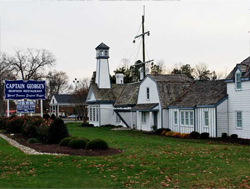
posted on Saturday, September 24th, 2011 at 7:47 pmWhen the original use of a structure becomes obsolete or is no longer required, as with older buildings from the industrial revolution, architects have the opportunity to change the primary function of the structure, while retaining some of the existing architectural character that makes a building unique. The Captain George’s Restaurant in Williamsburg, Virginia is an example of a large adaptive reuse project. At the time it was purchased by the owner’s the prior use was as the Williamsburg National Wax Museum, 1986.
Among the most rewarding redevelopment projects are the conversions and reuse of existing warehouses, school buildings, offices and other types to apartments. Such projects are rewarding in the context of providing affordable housing in established locations of lifestyle convenience to the prospective residents: neighborhood shopping, public transportation, schools, recreational and cultural opportunities.
Such an opportunity is under consideration for the Kemps Landing School building in Virginia Beach, Virginia. 
The current structure was built on the site of previous public schools for the Kempsville community. The old county jail was the first public school after the courthouse moved to Princess Anne in 1824, and remained the school location until the late nineteenth century when it was replaced by a frame structure which stood near the east bank of the Eastern Branch of the Elizabeth River. The existing two-story structure, completed in 1941, continued in use until it became part of the Historic Kempsville Area Master Plan, adopted in 2006.
On the agenda for project execution Virginia Beach City Planners are faced with three administrative tasks:
1. gaining neighborhood acceptance
2. adopting appropriate prescriptive land use regulations
3. establishing building and safety guideline standards within the spirit of the current building codes (if not the letter)
These challenges are “business as usual” for rewarding adaptive reuse projects.
The concern about gaining neighborhood acceptance diminishes with each successful undertaking. There really is no other way than to handle each conversion on a project by project basis. This is accomplished by open meetings and hearings with the respective neighborhood civic organizations. No new science here. Good intentions are eventually communicated and approved, albeit with conditions as derived from the meetings.
In the case of the other two challenges it is worth noting that in cities where adaptive reuse has been around for a long time guidelines an ordinances have been written to streamline the process. Take Los Angeles, CA for example. It has had an Adaptive Reuse ordinance and guidelines in effect since 1999. The latest edition was published in 2006. Provisions in The LA Handbook provide greater flexibility in meeting zoning and building code requirements for building conversions.
In regard to Zoning and Land Use Ordinances the LA Adaptive Reuse Ordinance includes: (1) many non-compliant conditions, such as building height, parking, floor area and setbacks are permitted without requiring a variance, as well as residential density requirements, (2) new mezzanines less than one-third the floor area of the space below are not counted as floor area, (3) discretionary review by the planning department is not a requirement.
In regard to Construction Codes the LA Adaptive Reuse Ordinance offers conditions in which the conversion of the original structure does not automatically trigger disabled access requirements in the residential use areas. Disabled access is still required in areas used by employees and that are open to the general public.
The virtues of Adaptive Reuse as an urban redevelopment strategy is compelling, including land conservation and reducing the amount of sprawl. Adaptive reuse is also related to the field of historic preservation. I think it would be energy well spent for planners to endeavor to compose the new Adaptive Reuse regulations that are useful for a variety of projects, rather than just the one that is on the table at a given moment in time. I am interested in your comments and stories of your own experiences.
Tags: accessible, adaptive, building codes, historical, landmark, Neighborhood, pedestrian, place, preservation, reuse, tax credits, urban, walkable, zoning
Specifying “affordability” in Traditional Neighborhood Design
posted on Wednesday, September 14th, 2011 at 6:15 pmRedevelopment planners are facing a new challenge for replacing deteriorated single-family houses with new homes that conform to Traditional Neighborhood Design standards, including that prospective buyers cannot qualify for the selling price of the new home. A sagging economic climate has made getting financing to purchase a new home increasing difficult for more and more prospective homeowners. The cost of construction has not dropped enough to make new homes more affordable. The result is many builders are unwilling to invest in new construction for urban in-fill properties.
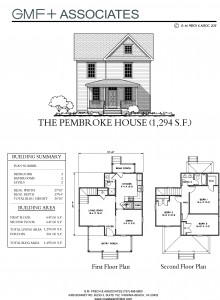
Sample affordable house plan
Norfolk Redevelopment and Housing Authority recently took a proactive approach to meeting this challenge. It is based on the assumption that if it could offer to their single-family builders new TND house plan that was less expensive to build, the construction cost could come down to a selling price that would enable today’s homebuyer to qualify for its purchase. Willing builders would jump at the chance, right?
How do they find a satisfactory house plan that meets the design standards of traditional neighborhood design and costs less to build?
Here are ten ways to accomplish that objective:
1. Reduce square feet. A 3-bedroom house on a small lot can be as small as 1,200 SF without being too small to be comfortable. Neighborhood streetscape density can dictate the maximum space between houses and the appropriate house width. This considera-
tion along with minimum room widths can increase the minimum to around 1,300 SF.
2. Reduce room separation walls. Open kitchens to dining areas; living rooms and foyers; hallways and laundry space.
3. Reduce bathrooms. Historical house plans from the early 20th Century typically had one full bath for a whole house. Today we can design for a single full bath located in the hall convenient to all the bedrooms, with chambered areas for multiple use; a powder room on the first floor is sufficient unless there is a bedroom.
4. Reduce building offsets. Straight walls use less lumber to construct; long walls are more cost efficient that short walls; a square is the most efficient building shape.
5. Modest size bedrooms are okay. Give priority to large spaces in the open areas where the family gathers as a group. Historically speaking, house plans typically had small bedrooms, in Europe they still do.
6. Concentrate plumbing into one quadrant. Minimize the length and number of drainage and water lines.
7. Avoid unnecessary windows and doors. Design for window balance and proportions on the front profile as viewed from the street, other sides of the house can have one window per room.
8. Reduce the number of shingles on the roof. Keep roof slopes the minimum necessary to achieve historical architectural style; avoid dormers.
9. Minimize porches and details. TND architecture will certainly deal with a covered entry porch. Strive to keep it simple and locate it as close as allowed to the sidewalk.
10. Locate house with space on one side to park at least one car off the street. It is desirable to leave enough space to construct a detached garage at a later time.
NRHA sent out an RFP in July, 2011, to local architects and builders, to develop new house plans that would meet affordability parameters based upon a published preliminary plan that its in-house architects derived. The resulting construction plans would be published in its on-line HOUSE PLANS LIBRARY where pre-approved urban plans are displayed for purchase from the architects and designers who own the copyrights. It remains to be seen whether the plans will found “acceptable” by builders for speculative projects or their own marketing agenda. Dozens of ready-to-build urban plans can be purchased from on-line plans websites.
It is worth comment what other planning approaches may be available to spur house construction action toward affordable products in the urban setting. What is the likelihood of success with the NRHA plans it is developing?
Tags: affordable, architecture, compact, design, house plan, low income, Neighborhood, new, plans, porches, sidewalks, single family, small, traditional, urban, workforce
Neighborhood Preservation – Design Center – Norfolk, VA
posted on Friday, September 9th, 2011 at 7:50 pmThe life expectancy of a 100+ year-old frame houses reaches a point of critical repair or removal that is a challenge for city planners to maintain traditional urban neighborhoods, such as Norfolk, VA. How can city planners control what happens to maintain or restore the original character of these streets? ENTER: The Design Center conveniently operating in a storefront on a sidewalk of the downtown core: an administrative office, under the Department of Planning, to advise/regulate the redevelopment and preservation of urban neighborhoods. 
Any new/replacement house on a lot 50’ or narrower has to be approved by the watchful eye of The Design Center. (At Building Permit Review no plan gets a permit unless and until its design is approved by the Design Center.) Where does the DC get the plans to recommend for replacement? ANSWER: from its catalog of prior-approved plans contributed by local architects and designers. As an alternative, the property owner can create a new plan for submittal/review/approval by the Design Center. Here’s a sample of some ready-to-build urban house plans.
The redevelopment of a NARROW LOT is an aggravated issue in Norfolk, Virginia. In the early 1900’s developments were platted with 25’ and 30’ lots. These small lots had a very attractive price for prospective buyers. It may have been a “bait and switch” marketing strategy since many of the lots were sold in pairs. But it did result many streets with very compact home frontages. A hundred years later we now see these streets as “quaint”, “neighborly”, “walkable”, but not “parkable” (damn that automobile!)
Since any given neighborhood street has its own special architectural character or style, house plan choices recommended by the Design Center are limited to those that are best suited upon an inspection and photo documentation of the adjacent properties and across the street. This architectural sensitivity has produced very constructive results, without a backlash of homeowner controversy. Norfolk’s Design Center initiated its mission in 2004, staffed by planners and aspiring architects including interns from nearby Hampton University, School of Architecture.
Added to the mission of prescribing acceptable house plan designs for narrow lot properties the Design Center has been available for free “drop in” architectural consultation services for a homeowner wanting to make improvements to an already existing house needing repairs or an addition. This consultation included a staff designer making a visual site inspection of the resident’s home to measure and photograph an existing structure, to talk to the home owner about their desired improvements and additions and to provide conceptual design recommendations for the homeowner to pursue.
The “cherry on the top” of this new urbanism agenda is a TAX ABATEMENT program whereby a homeowner could apply for a deferred increase in the real estate taxes (up to 10 years worth) associated with the construction improvements consistent with the conceptual design recommendations provided by the Design Center. What could be simpler than that? …an incentive to control the original architectural neighborhood style, historical charm, pedestrian livability. Are you loving it?
 Ready for the back story? Everyone loved it, including local new urbanism architects, like yours truly, since we participated in providing those pre-approved plans. It also wasn’t too mysterious to flip through the plans catalog to find the name of a local architect that would be able to complete the building plans for additions and alterations that would gain tax abatement approval. That happy world came to an end in 2011 with a cutback in local government funding. The free consultation services are no more. The storefront where citizens walked in to discuss their addition plans has closed its doors.
The operational model of the Norfolk Design Center has been envied by municipalities for years, including Baltimore, Portsmouth, Virginia Beach, Newport News, Williamsburg, and others. The more character there is to preserve in a city’s existing neighborhood street fabric the greater the appeal of this model to preserve and control it. It was staffed by two full-time architects, part-time architect interns, volunteers and staff. It became a lunch-and-learn venue for architects in the Hampton Roads AIA to attend special seminars and other times for citizens to get guidance for product information and architectural design styling.
I am interested in feedback on value of this model for architectural design control for preserving and promoting the ideals of new urbanism, from planners, homeowners and other design professionals. Is the model for the Design Center an applicable idea for the city where you live? How should it be housed and staffed to reduce expenses? In Norfolk the tax abatement program and the narrow lot approval regulatory authority have moved back to the regular administrative offices of Norfolk City Planning. I wonder what difference this will make in what it is able to accomplish. I think it is a sad loss.
Tags: architecture, Design Center, narrow lot, Neighborhood, new urbanism, Norfolk, pattern book, preservation, resource center, tax abatement, traditional, urban